.svg)


Reviewed: 14 Best Free Employee Monitoring Software Tools
Not all free employee monitoring tools deliver what they promise. This guide reviews 14 options so you can evaluate before committing to the budget.




On this page
Measure the work, not the signal.
See productive time and utilization by team, not just what looks active.
Key Takeaways:
- Free employee monitoring software is rarely as free as it appears: user caps, shallow reporting, and limited visibility hit earlier than most teams expect.
- Most free plans cap at three to five users and restrict manager-level visibility into app usage, productivity analytics, and cross-team performance data.
- Free monitoring tools typically cover time tracking basics but lack the productivity analytics and workforce insights needed for operational decision-making at scale.
- Teams growing past initial free-tier limits can face full platform migrations rather than simple upgrades, making tool selection at the outset strategically important.
- Ops leaders evaluating free employee monitoring tools should assess long-term feature depth, not just starting cost, before committing to a monitoring platform.
According to Digital.com, 78% of employers now use some form of employee monitoring software, up from 60% before the pandemic. For ops leaders evaluating their first tool or replacing one that has hit its limits, the free tier is the obvious starting point.
But as you’ll see below, free employee monitoring software is rarely as free as it looks. User caps hit earlier than expected. Reporting can be shallow. And the moment your team grows past 3 to 5 users, you may be facing a full migration rather than a simple upgrade.
This list is meant as a starting point, not a definitive ranking. It covers 12 free and open source options, plus one paid tool with a free trial, so you can evaluate the full spectrum before committing to a budget. If you are a small team, startup, or ops manager testing the waters on free employee monitoring software, this is where to begin.
What Is Free Employee Monitoring Software?
Free employee monitoring software refers to tools that track employee activity, time, attendance, or productivity at no cost.
In practice, what "free" means differs widely by platform. Some plans cap users or lock advanced features behind a paywall. Other tools offer free trials that give temporary access to the full product. And then there are fully free open source tools, which often require self-hosting and a more advanced setup.
This page is for small teams, startups, and operations managers who want to assess their options before purchasing. Knowing which category a tool falls into up front saves time and prevents mismatched expectations later.
Free vs. Freemium vs. Open Source: What Is the Difference?
Free plans put a ceiling on scale, not on features. You get the full core experience, but only up to a fixed number of users or a capped data volume. TMetric is a good example: up to 2 users get time tracking and unlimited project management at no cost. A third seat requires a paid plan.
Freemium tools put the primary ceiling on features rather than scale. The platform offers genuine core functionality for free but deliberately withholds capabilities that growing teams will eventually need, creating a natural pull toward a paid plan. Some freemium tools also layer a user cap on top of feature gating. ActivTrak is the clearest example on this list: its free plan caps at 3 users and locks most of its analytics behind paid tiers, including real-time visibility and website blocking. Homebase takes a similar approach, capping at 10 employees and one location on the free plan while reserving advanced scheduling, advanced time tracking, and HR tools for paid tiers.
Open source tools like ActivityWatch and Veyon are fully free with no user caps, but require self-hosting and technical resources to deploy and maintain. They offer full data control in exchange for setup complexity.
Knowing which category a tool falls into before you evaluate sets clearer expectations and prevents wasted time.
What to Look for in Free Employee Monitoring Software
Before comparing tools, define your evaluation criteria. Five factors matter most:
- User cap on the free tier. Most free tools limit you to 1 to 5 users. If your team is already larger, this immediately narrows the field.
- Feature access vs. paid plan. Understand what is actually included in the free tier versus what is locked. Screenshots, productivity analytics, and compliance features are almost always paywalled.
- Data retention limits. Some tools store as little as two weeks of historical data on free plans, which limits reporting and trend analysis.
- Ease of setup. Open source tools require technical setup. If your team lacks IT support, these might not be the most practical starting point.
- Upgrade path. Check whether the free plan scales or forces a full platform migration when you outgrow it. A difficult upgrade path has a real cost.
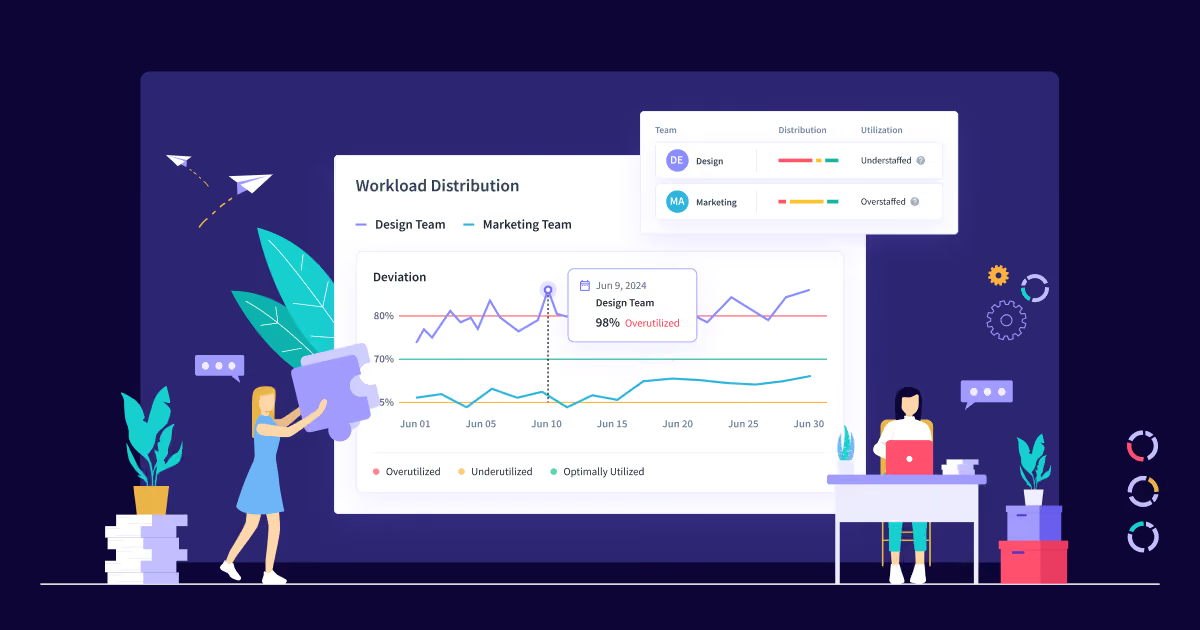
See how Insightful compares to other tools. Start Free Trial.
14 Free and Open Source Employee Monitoring Software Tools
This list covers 13 free and open source options plus one paid tool with a free trial. We’ve structured each entry to cover the same key points: Best For, Free Plan Limit, Key Features, Integrations, and Pros and Cons.
1. Homebase
- Best For: Small businesses and hourly teams needing free time tracking and scheduling for teams of up to 10 employees.
- Free Plan Limit: Up to 10 employees and 1 location. Includes basic time tracking, scheduling, and POS integration. Payroll is a separate paid add-on ($39/month + $6/employee).
- Key Features: Time clock, basic scheduling, POS integration, and mobile app.
- Integrations: Square, Clover, Gusto, QuickBooks, ADP, Toast, and Lightspeed.
➕ Pros: Genuinely free with no credit card required, covering basic scheduling, time tracking, and job posting for teams of up to 10.
➖ Cons: No screen monitoring, app usage tracking, or productivity analytics. Useful for scheduling, not workforce visibility.
2. ActivTrak
- Best For: Small teams of up to 3 users needing automatic time tracking and activity logging without paying.
- Free Plan Limit: Up to 3 users, with 30 days of data history. Screenshots are not available on the free plan and require the Screen Details add-on, which is only purchasable with a paid plan.
- Key Features: Automatic time tracking, activity summary by user and team, activity logs, activity alarms, custom activity classifications, and role-based access controls.
- Integrations: Google Workspace, Microsoft 365, Slack, Salesforce, BambooHR, and Okta.
➕ Pros: Strong compliance baseline on the free plan, with HIPAA, GDPR, CCPA, and SOC 2 Type 2 included at no cost alongside activity logs and alarms.
➖ Cons: The 3-user cap makes it impractical for any team that grows. Most analytics features, including real-time visibility, website blocking, and app/website usage, require a paid Essentials plan from $10/user/month.
3. RescueTime
- Best For: Individual employees and freelancers wanting automatic productivity and distraction tracking.
- Free Plan Limit: Free Lite version, tracks websites and apps, weekly email reports, and report history limited to 2 weeks. The Lite plan is not listed on the public pricing page and becomes visible after sign-up.
- Key Features: Automatic app and website tracking, focus session tools, and weekly productivity reports.
- Integrations: Slack, Google Calendar, Zapier, GitHub, Asana (most integrations on paid plan only).
➕ Pros: Fully automatic with no manual input needed, ideal for self-directed time awareness.
➖ Cons: No workforce dashboards, attendance tracking, or team-level reporting. Lite version only available after sign-up. Not built for manager oversight.
4. ActivityWatch
- Best For: Individuals and privacy-conscious users needing fully free, open-source automatic time and app tracking with no data leaving their device.
- Free Plan Limit: Completely free with no premium tiers and no usage limits. Designed for individual self-tracking only. All data is stored locally on your device and never uploaded to the cloud.
- Key Features: Automatic app and window title tracking, usage categories, browser extensions for Chrome and Firefox, and editor plugins for code tracking. Note: device sync across multiple devices is not yet available.
- Integrations: Browser extensions for Chrome and Firefox. No native SaaS integrations.
➕ Pros: Fully free and open source with no paywalls, no ads, and no data sent to external servers. Runs on Windows, macOS, Linux, and Android.
➖ Cons: No workforce dashboards, team reporting, or manager-level visibility. Device synchronization is not yet supported. Designed for individual self-tracking, not organizational monitoring.
5. Paymo
- Best For: Freelancers needing free time tracking, task management, and invoicing in a single tool.
- Free Plan Limit: 1 user, includes time tracking, task-list board, unlimited invoices, and desktop and mobile tracking. Limited to 1 client and 2 projects.
- Key Features: Time tracking, basic invoicing, and desktop and mobile apps.
- Integrations: Integrations are only available on the Plus plan and above; none are available on the free plan.
➕ Pros: Unusually feature-rich free tier for freelancers, with invoicing included at no cost.
➖ Cons: Single-user cap and limits of 1 client and 2 projects make it unsuitable for growing teams.
6. TMetric
- Best For: Solo users or duos needing free time tracking with unlimited projects and client management.
- Free Plan Limit: Up to 2 users (reduced from 5 in February 2026), includes time tracking, reporting, unlimited projects, and clients.
- Key Features: Time tracking, project and client management, basic reporting, browser extensions, and a mobile app.
- Integrations: Jira, Asana, Trello, GitHub, GitLab, Basecamp, Todoist, Zapier. (most integrations require paid plans; browser timer button in 50+ apps is included free)
➕ Pros: Unlimited projects and clients included at no cost, with a clean interface suited to solo professionals and small duos.
➖ Cons: 2-user limit, no screen monitoring, productivity analytics, or workforce visibility features on the free tier.
7. TimeCamp
- Best For: Unlimited users needing simple automatic time tracking with basic attendance and reporting.
- Free Plan Limit: Unlimited users with automatic time tracking, attendance, and unlimited projects. Projects cannot be broken into tasks or subtasks on the free plan. Integrations and task management require a paid plan from $3.99/user/month.
- Key Features: Automatic time tracking, attendance tracking, basic reporting, project time allocation, browser extension.
- Integrations: Asana, Trello, Jira, Slack, Google Workspace, Basecamp, ClickUp, Monday.com (most integrations on paid plans only).
➕ Pros: Unlimited users and unlimited projects on the free plan are a genuine differentiator, making it one of the most accessible free tiers on this list.
➖ Cons: No task or subtask support on the free plan limits project depth. No app or website tracking, no overtime or advanced attendance features. Most integrations require a paid upgrade.
8. Clockify
- Best For: Small teams of up to 5 needing free multi-platform time tracking with project and client management across unlimited projects and tasks.
- Free Plan Limit: Up to 5 users, with unlimited projects, tasks, clients, and time tracking. Reports are limited to a 1-month date range on the free plan. Screenshots and GPS tracking require the Pro plan at $9.99/user/month.
- Key Features: Timer, timesheet, auto tracker for app and website activity (visible to the individual user only), team activity dashboard, basic reporting, calendar view, idle detection, and browser extensions for Chrome, Firefox, and Edge. Available on Windows, macOS, Linux, iOS, and Android.
- Integrations: Jira, Asana, Trello, Slack, Salesforce, Zendesk, Todoist, and 100-plus other apps via browser extensions and native integrations.
➕ Pros: Genuinely free with no credit card required, clean interface, and one of the broadest integration sets on this list at no cost. Cross-platform with offline tracking on mobile.
➖ Cons: No screenshots, no productivity analytics, and no manager-level visibility into app or website usage on the free plan. The auto tracker data is private to each individual employee and cannot be viewed by managers. Free plan capped at 5 users.
9. Veyon
- Best For: IT administrators and educational institutions needing a free open source monitoring solution.
- Free Plan Limit: Fully free and open source, no user cap. Requires self-hosting and technical setup.
- Key Features: Real-time screen viewing, remote desktop control, screen broadcasting, user login monitoring, and cross-platform support on Windows and Linux only. macOS is not currently supported.
- Integrations: LDAP and Active Directory for user management, no native SaaS integrations.
➕ Pros: Completely free with no user cap, self-hosted for full data control at any scale.
➖ Cons: Requires a dedicated IT resource to deploy, designed for supervised lab environments rather than commercial workforce monitoring.
10. Screenshot Monitor
- Best For: Freelancers and small teams needing screenshot-based proof-of-work tracking.
- Free Plan Limit: Free for up to 1 owner + 2 employees, with 3 screenshots per hour and 2-week screenshot retention.
- Key Features: Periodic screenshots, activity tracking, work session summaries, web-based dashboard, client reporting, and offline functionality.
- Integrations: Primarily standalone, with limited Zapier connectivity available.
➕ Pros: Simple screenshot-based tracking with minimal setup for freelancers and small teams.
➖ Cons: 2-employee cap and 2-week screenshot retention limit make it impractical beyond solo or duo use, with no team dashboards or compliance features.
11. TrackingTime
- Best For: Teams of any size needing free unlimited-user time tracking integrated with popular project management platforms.
- Free Plan Limit: Unlimited users, includes time tracking, unlimited projects, tasks, and clients, and basic reporting. Paid plans from $3.75/user/month are needed to unlock AutoTrack, shared reports, billable rates, and invoicing.
- Key Features: Time tracking, project and task management, basic reporting, browser extension, and mobile app.
- Integrations: Asana, Trello, Basecamp, GitHub, Jira, Notion, Slack, and Google Workspace.
➕ Pros: One of the most generous free plans on this list with unlimited users, projects, tasks, and clients. Clean interface with strong integrations into common project management tools.
➖ Cons: No screen tracking or productivity analytics, functions as a time logger rather than a monitoring tool.
12. SXR Software
- Best For: Windows-only organizations needing a free on-premise employee screen monitoring solution.
- Free Plan Limit: Free Windows-only version with multiple monitoring modules covering processes, internet activity, file logging, USB activity, and screenshots.
- Key Features: Screen capture, app and website monitoring, activity logging, file and USB tracking, stealth mode option.
- Integrations: Primarily standalone on-premise, no native cloud integrations.
➕ Pros: Free on-premise deployment gives organizations full local data control with no subscription costs.
➖ Cons: Windows-only, no cloud deployment, no mobile support, and requires an IT resource to manage. The developer's website has not been updated since 2017, raising questions about ongoing support and maintenance.
13. PC Screen Watcher
- Best For: Individuals or very small teams needing a lightweight, free screen capture and activity log tool.
- Free Plan Limit: Free version available, includes basic screen capture functionality.
- Key Features: Periodic screen capture, activity log, basic reporting, stealth mode.
- Integrations: Standalone, no third-party integrations.
➕ Pros: Lightweight and free with minimal setup for basic screen activity logging.
➖ Cons: No productivity analytics, no reporting depth, not suitable as a standalone monitoring solution for any business of scale.
14. Insightful: Complete Workforce Analytics With a 7-Day Free Trial
- Best For: Teams that have outgrown free tool limits and need full workforce analytics, compliance support, and remote and hybrid visibility in one platform.
- Free Plan Limit: No free plan. 7-day free trial with full feature access and no credit card required.
- Key Features: Real-time productivity dashboards, automatic time mapping, app and website tracking, location insights for remote vs. on-site comparison, attendance tracking, SOC 2, HIPAA, and GDPR compliance, role-based privacy controls, and org group functionality to identify performance differences across teams.
- Integrations: Jira, Asana, BambooHR, ADP, Google Workspace, GitHub, GitLab, Okta, Workday, Trello, ClickUp, and 40 more.
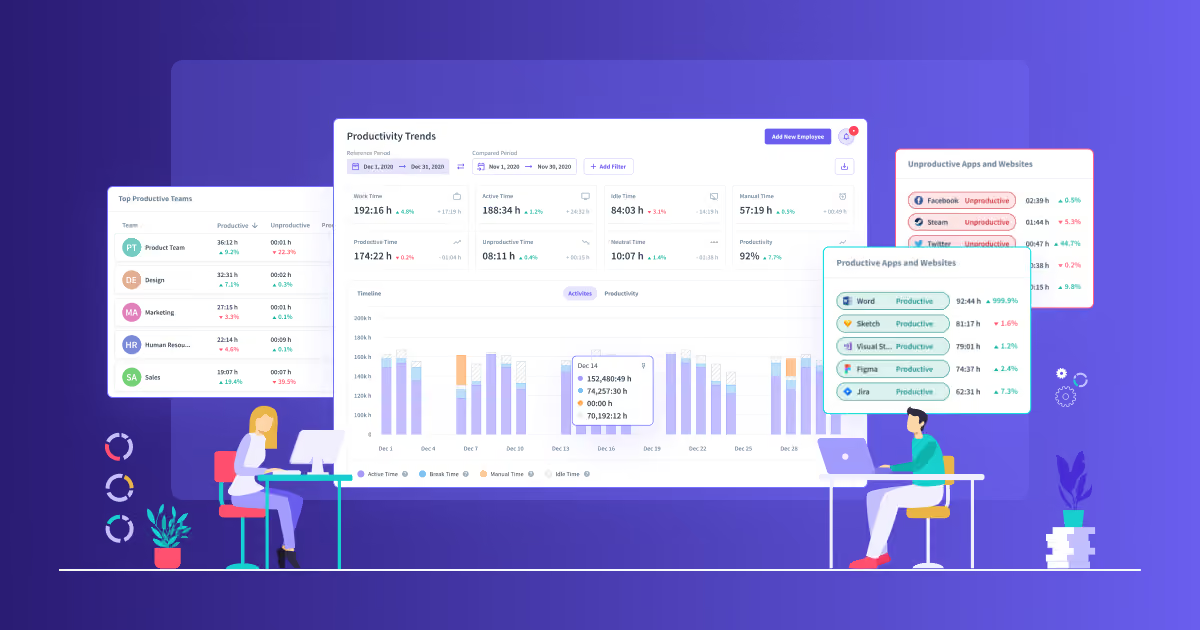
Insightful is the only paid tool on this list, included because it represents where most teams move once free options hit their limits. Unlike the other tools listed, Insightful offers full workforce analytics across remote, hybrid, and in-office teams, with automatic time mapping that requires no manual input from employees. It is SOC 2, HIPAA, and GDPR compliant, something no free tool here can offer.
At Peach Payments, Insightful’s work intelligence platform supported 40% business growth and a 22% increase in remote team productivity, with teams driving the output of eight people using just two new hires. The 7-day free trial includes full feature access with no credit card required.
➕ Pros: Full workforce analytics, compliance certifications, automatic time mapping, and 50-plus integrations. Insightful emphasizes system-wide visibility over individual tracking, moving teams from observing work to influencing outcomes.
Realistic Limitations of Free Employee Monitoring Tools
Free tools can solve a narrow problem well. They rarely solve an operations problem at scale.
The most consistent limitations are user caps that block scalability, no advanced productivity analytics, no automated time mapping, no dedicated support, and no compliance certifications for SOC 2, HIPAA, or GDPR. And those compliance gaps carry real exposure: GDPR violations alone can result in fines of up to €20 million or 4% of global annual turnover, whichever is higher.
For a team of 20 or 200, these platform limitations translate into guesswork capacity planning, blind spots in team productivity, and restricted workforce visibility. Free tools are a starting point, not a solution.
Ready to go beyond the free tier? Insightful's 7-day trial gives you full access, no credit card required.
When Should You Upgrade From a Free to a Paid Monitoring Tool?
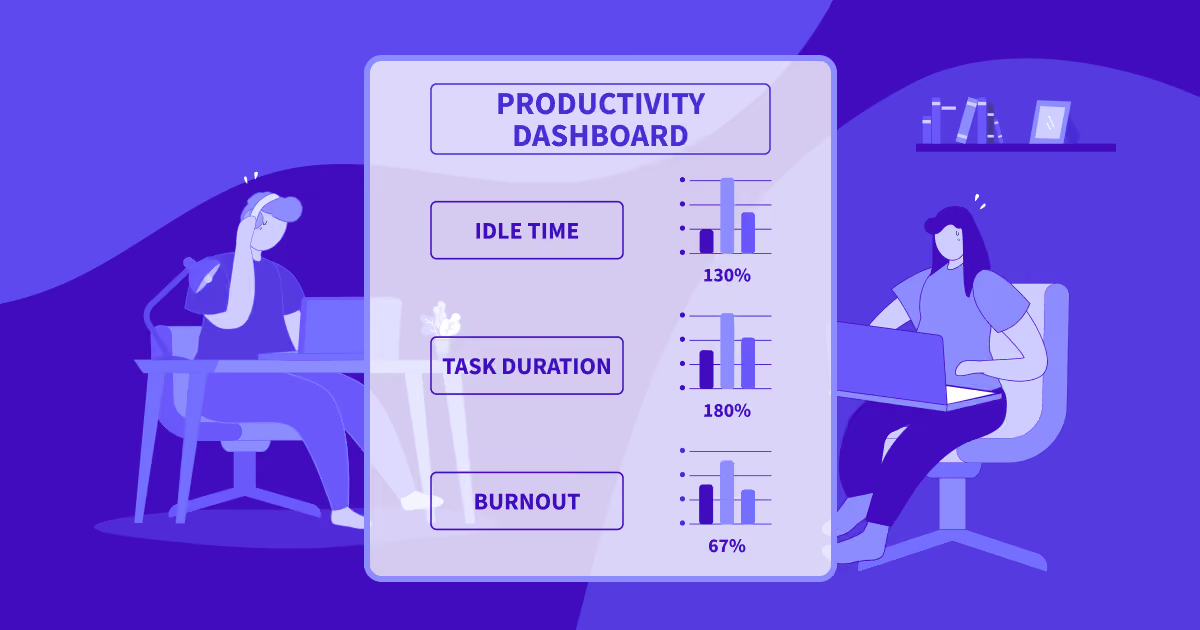
Four signals indicate it is time to move on from a free tool:
- Team size. Your free tier user cap has been reached or is close to it. Managing a workaround is a cost in itself.
- Analytics depth. You need productivity insights beyond basic time logging. Consider upgrading if you need real-time utilization data, workload distribution, or actionable capacity planning insights.
- Compliance. Your organization has SOC 2, HIPAA, or GDPR requirements that no free tool on this list can meet. SOC 2 Type 2 audits typically cost between $30,000 and $150,000 in year one, putting paid platforms with built-in compliance ahead in ROI as well as capability.
- Remote or hybrid visibility. You need location-based reporting and real-time dashboards across distributed teams, not just time logs.
If any of these apply to you, consider Insightful's 7-day free trial your logical next step.
FAQs
What is the best free employee monitoring software?
It depends on team size and need. TimeCamp is the strongest option for unlimited users needing basic time tracking. Homebase supports up to 10 employees on its free plan and is best suited for scheduling-focused teams. ActivTrak offers the best free-tier analytics for teams of up to 3. For full workforce visibility, Insightful's 7-day trial gives complete access with no credit card required.
Is truly free employee monitoring software available, or is it always freemium?
Both exist. Open-source tools like ActivityWatch and Veyon are free but require self-hosting. Freemium tools like ActivTrak and Homebase offer free tiers with user or feature caps. Open source tools demand IT maintenance; freemium tools are easier to launch, but constrain what you can do without upgrading.
What are the limitations of free employee monitoring tools?
The most common limitations are user caps of 1 to 3 users, no screen monitoring, no productivity analytics, limited data retention, and no compliance certifications. These limits are manageable for very small teams but become operational liabilities at scale, particularly for organizations with SOC 2, HIPAA, or GDPR obligations.
Can free employee monitoring software work for remote teams?
Yes, with caveats. TimeCamp and ActivTrak support remote tracking on free tiers, but distributed teams typically need location-based reporting, automated time capture, and real-time dashboards, features consistently locked behind paid plans.
When should a business move from free to paid employee monitoring software?
When you hit your free tier user cap, need analytics beyond time logs, face compliance requirements, or manage remote and hybrid teams needing real-time dashboards. If one or more of those apply, the cost of staying on a free tool likely exceeds the cost of upgrading. Insightful's 7-day free trial is a low-friction way to evaluate the difference.

.webp)
.webp)


