.svg)


Your board numbers don't match your workforce reality
Your ERP and your finance stack report the quarter's outputs to the decimal. The hours and the teams that produced them are reported by whoever assembled the deck.


.avif)











H&CO
National Law Firm

Axiz
Turn two versions of the quarter into one record

Without Insightful

Both facts are true, they sit in different systems, and neither one corrects the other.
By the operating review the gap is history, and the site behind it has moved on.
The case is written before anyone can say what the current team is running at.
Nobody can say which paid licenses were opened, so the invoice goes through as issued.
Each review starts with a request to three teams and two weeks of collection.

With Insightful

Hours and output by team and by site, set beside the number the board already saw.
Each measure against the period before, while the quarter still has weeks to run.
Measured output by team, so the case reaches the board already tested once.
Every seat comes back with the last date somebody opened it, before anyone signs.
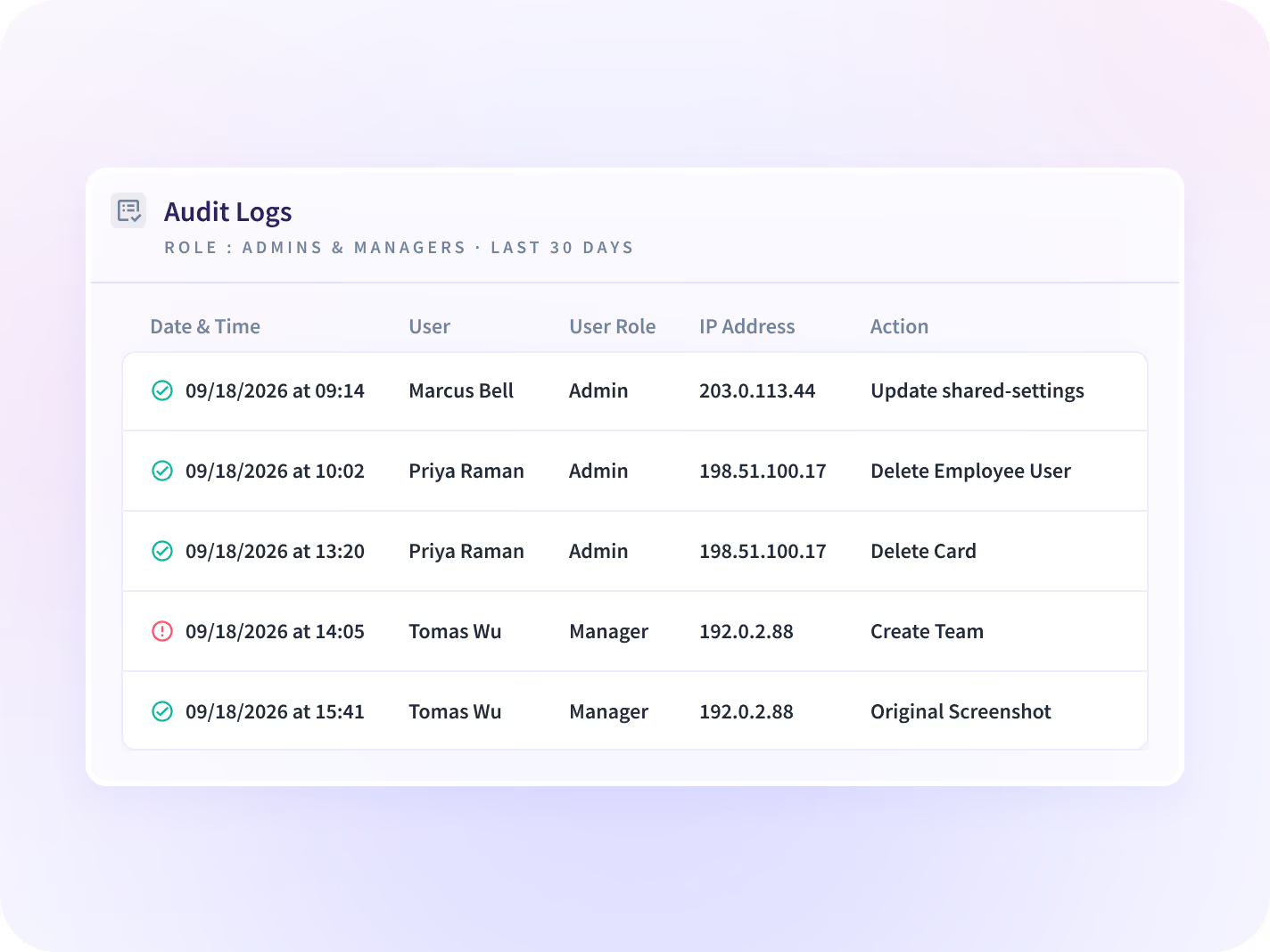
Every admin change held with its actor and time, on the Audit Logs add-on.
Close the delivery gap while the quarter is still open
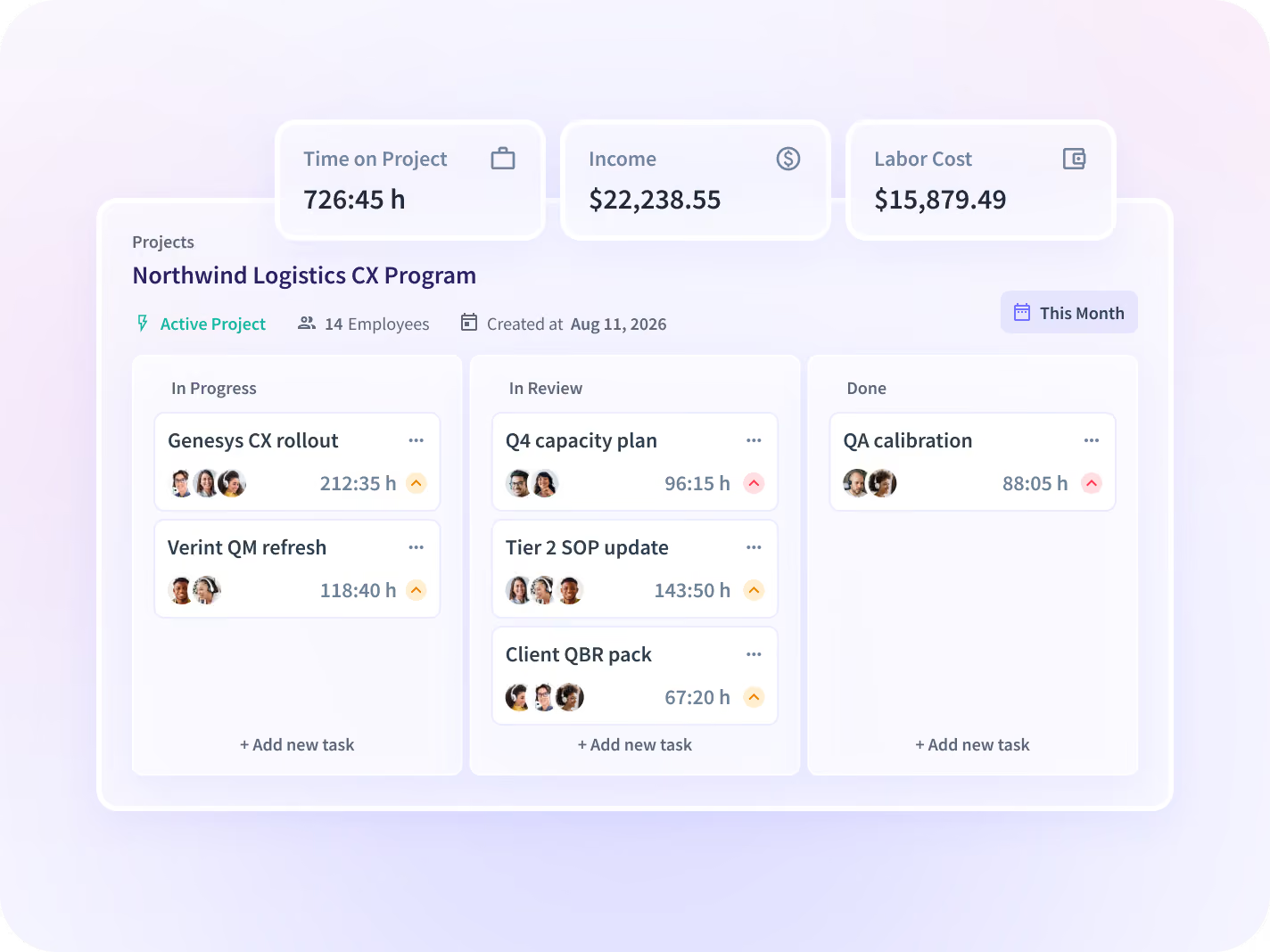
Hours map to team, project and client as the work happens, and every number carries its percent change against the same-length period before it.
- Rank process fixes by the hours they return, not by who asked loudest
- Roll delivery hours up from team to site to the whole business
- Put a site and a week on the gap before the operating review
Take a hiring request to the board already tested
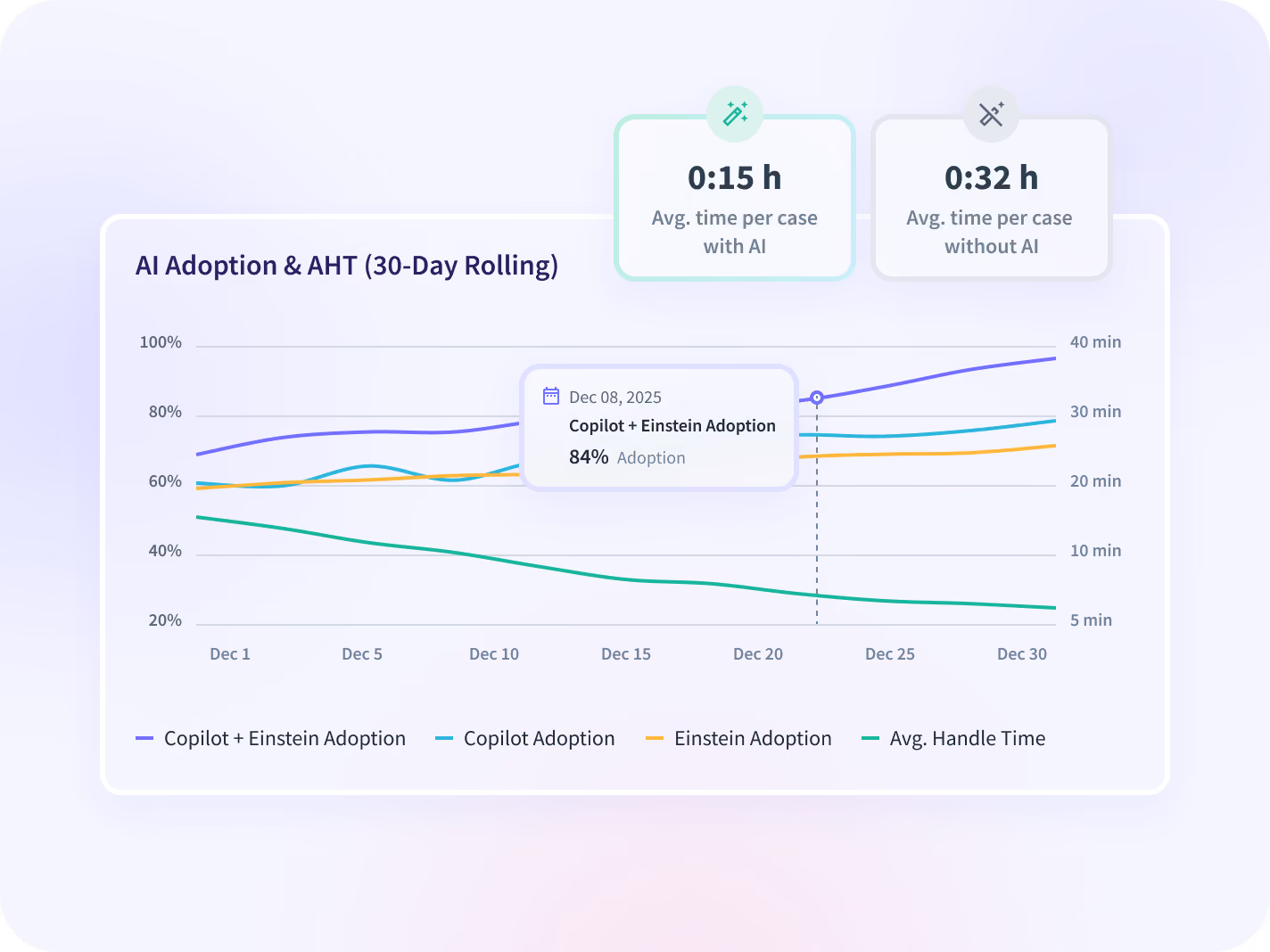
Measured output by team sits beside the headcount request, and every seat comes back with the last date somebody opened it, AI seats included.
- Test a hiring request against the output the current team produces
- Benchmark AI-enabled teams against teams working without it
- Resize a renewal on seats opened before the invoice is approved
See which version of the quarter is right
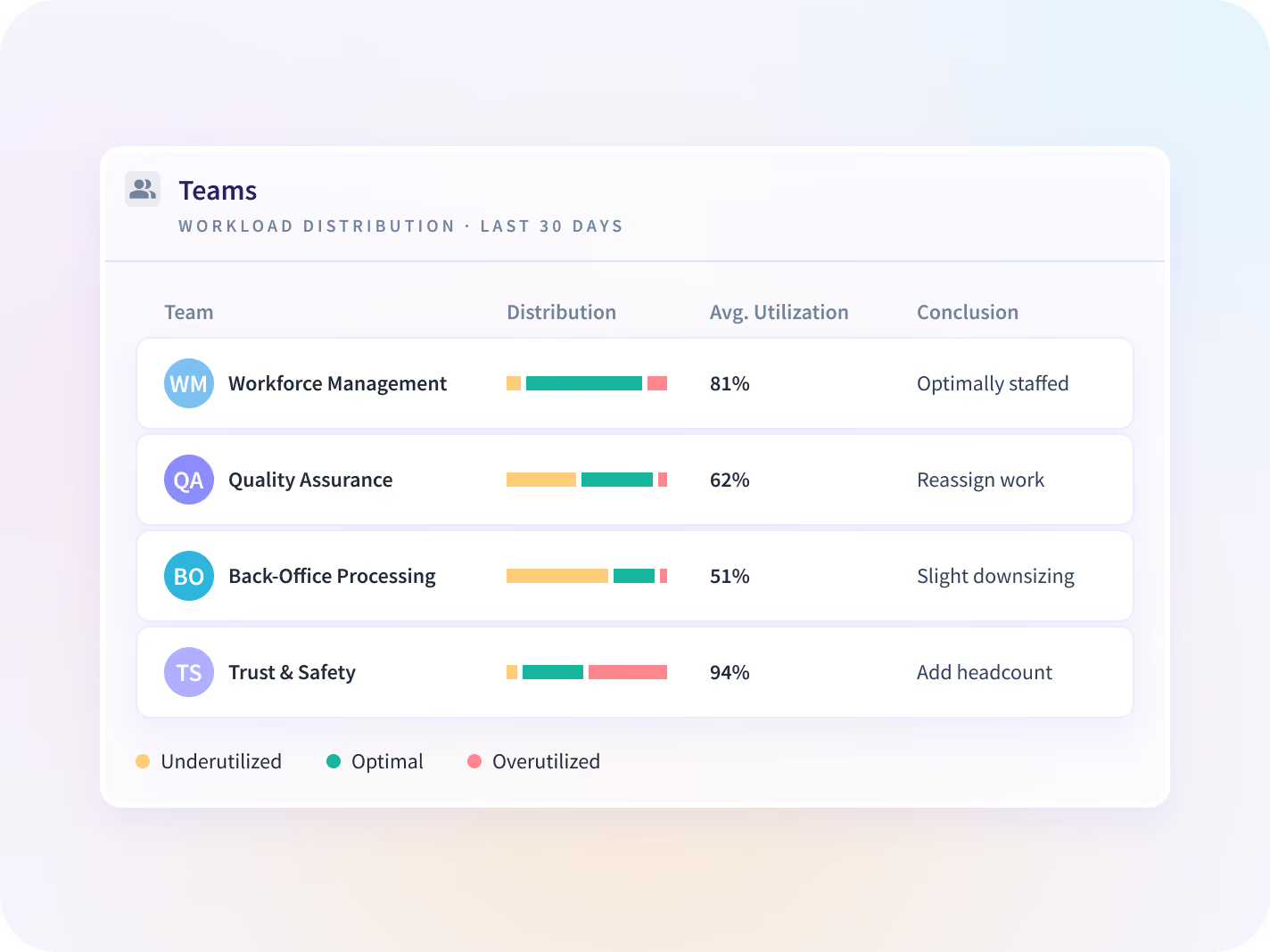
Read workload by team beside the engagement survey
Unscheduled calls, message threads and email count too, so meeting and message load is what coordination took, read by team beside the survey.
- Read workload spread by team against the period before it
- Separate meeting and message load from uninterrupted focus time
- Let people open their own record in a visible rollout
Agree scope and residency before the governance review
A security review wants evidence that exists before it asks. Scope and residency are agreed before rollout, and reporting defaults to the team.
- Keep work data in your own environment where the review requires it
- Report at team level by default rather than on a named individual
- Hold every admin change, unalterable, on the Audit Logs add-on
Where enterprise work data lives, and who reads it
Narrow by design: the shape of work, never its content. On-premise or private cloud keeps it in your own environment, with access scoped by role.






The answers your board expects you to have
Asked together, the three put delivery, headcount and AI spend on one record, so the board sees one version of the quarter rather than three.

Where does the delivery time go?
Which activities consume capacity and which return it, by team and by site.

Is headcount justified by output?
Measured output by team, read before the next hiring request is approved.

Is the AI investment paying off?
AI-enabled teams against teams without it, and a last-opened date on every seat.
The operating review, read off one record
Delivery, finance, HR and governance open the same record of hours and output, by team and by site, when the operating review starts.




Every system your enterprise runs on, connected
Insightful connects to the HR, finance and project tools an enterprise already runs on. You can talk to your work data with MCP connectors.


Your next board conversation starts here
What enterprise leaders ask us most
Workforce analytics software turns data about how work happens into decisions about capacity, cost and process. Insightful is a work insights platform. It collects hours, application use and meeting load from desk-based teams and reports them by team, each measure against the period before. At enterprise scale it combines task mining, workforce analytics and work intelligence in one, from a single desktop application deployed through your MDM. It does not tell you why a number moved. It tells you which team and which week to go and ask about.
Two of the lines are countable without a model: hours recovered and licenses retired. Output is reported by team and by site, and every tool is ranked by real use with a last-opened date against each paid seat, so a renewal is resized before it is signed. A process fix converts to cost at your own rate. There is no single blended ROI number, and an enterprise finance team would discount one anyway.
Three differences are worth checking against whatever else is on your shortlist. The span: hours, productivity and focus, application and license use, and work setting all come off one record and one desktop application, where elsewhere that takes more than one vendor and a reconciliation step. The posture: narrow by design, the shape of work rather than its content, with every control set before deployment. And the default: reporting lands at team level, not on a named individual.
A dashboard reports the outputs your systems of record already hold. This reports the work behind them, measured as work happens rather than reconstructed afterward: where the hours went by team and by site, which applications and AI tools the quarter ran on, and which paid seats nobody opened. That is the difference between a quarter that reconciles and a named team with a named process attached to the gap.
Start with what the desktop application refuses to capture. That is the question a legal reviewer opens with, and the one that stalls a rollout late. Then three more: whether reporting lands at team level or names an individual by default, whether the read is continuous or a periodic audit you commission, and what the deployment needs. On-premise and private cloud are both available, and data residency covers the US, the EU and Saudi Arabia.


